West Africa → Caribbean
Anansi and the Sea
How a clever spider carried hope across the water
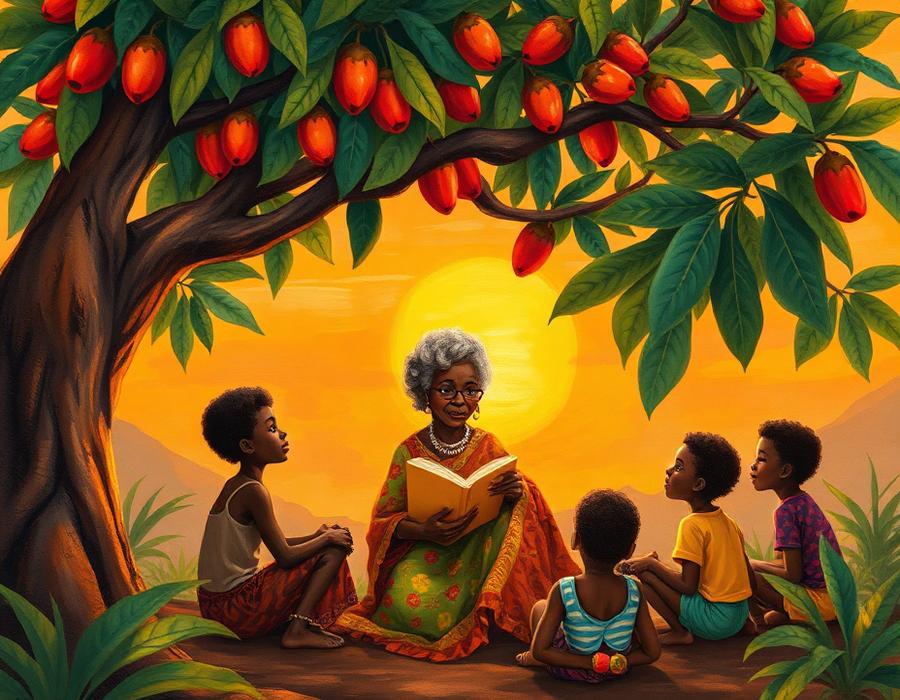
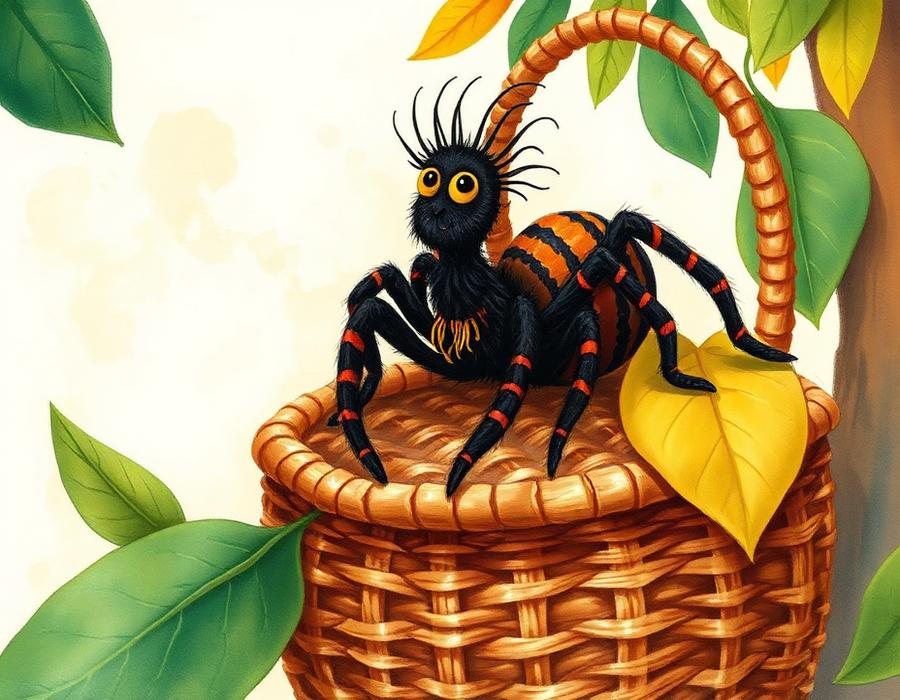
Long before the ships came, long before the chains, in a village in West Africa where the mango trees grew fat with fruit, the children would gather around the fire at night to hear stories about a spider named Anansi. Anansi was small — smaller than a mouse, smaller than a mango seed — but Anansi was clever. Oh, Anansi was clever. He could out-talk a lion, out-trick a leopard, and out-think the sky-god himself.
The grandmothers told these stories again and again, because every Anansi story carried a secret lesson: that being small is not the same as being weak, that a sharp mind can escape a strong hand, and that laughter is a kind of medicine. The children learned Anansi by heart. They took him into their dreams.
Then came the terrible time. Ships arrived on the coast, big ships with white sails, and cruel men with chains. They took people from their villages — mothers and fathers, aunties and uncles, and even the children who had just been listening to Anansi stories the night before. The people were forced onto the ships and carried far across the ocean, in a journey so long and so painful it had its own name: the Middle Passage.
They were not allowed to bring anything. No drums. No gold. No cooking pots. Not even the clothes their mothers had woven for them. But the traders could not see inside a person's heart, and inside their hearts, the people carried Anansi. They tucked him safe between memory and hope, and he crossed the ocean with them.
When the ships finally reached the Caribbean — islands like Sint Maarten, Jamaica, Curaçao, and so many more — the people were forced to work in fields and salt ponds under a punishing sun. Their days were hard beyond words. But at night, in the small huts where families slept side by side, an old man or an old woman would begin: "Once upon a time, there was a spider named Anansi…" And for a little while, the children were back in the village. They were safe. They were laughing.
Anansi changed as he traveled. On some islands he learned new words; on others he wore new clothes. In Jamaica he became "Bruh Anansi." In the French islands he met his cousin Compère Lapin, the rabbit. But wherever he went, he kept his most important gift: he taught the children that being kind is a kind of magic, and that even the smallest voice can shake a mountain.
Today, every time a grandmother in the Caribbean sits down with the little ones and says, "Let me tell you an Anansi story…" she is pulling one more thread of a long, shining web. That web stretches from the fire-circles of West Africa, across the terrible dark of the Middle Passage, and into the bright yards of Caribbean villages today. It is a web that no ocean could ever break — and every child who listens becomes part of it.
Words to know
Anansi
A spider hero in stories from the Akan people of West Africa.
Middle Passage
The long ocean voyage that carried enslaved Africans to the Americas.
Folktale
A story passed down by voice from grandparents to grandchildren.
Trickster
A folktale character who uses cleverness instead of strength to win.
Keep reading

One Tété Lohkay
Sint Maarten · 8 min
Grandmother's Song
Caribbean · 6 min
Tula's Promise
Curaçao · 7 min
The Salt Pickers of Great Bay
Sint Maarten · 6 min
Drums in the Hills
Caribbean · 6 min
Queen Nanny of the Maroons
Jamaica · 7 min
The Silk Cotton Tree
Caribbean · 6 min
The Cassava Lesson
Caribbean (Taíno & Kalinago) · 6 min
The Lantern Keepers
Sint Maarten · 5 min
The Freedom Bell
Sint Maarten & the Dutch Caribbean · 6 min
Compère Lapin and the Well
French Caribbean · 6 min
The Island of Two Flags
Sint Maarten / Saint-Martin · 6 min